
Dr. Margaret Oakley Dayhoff
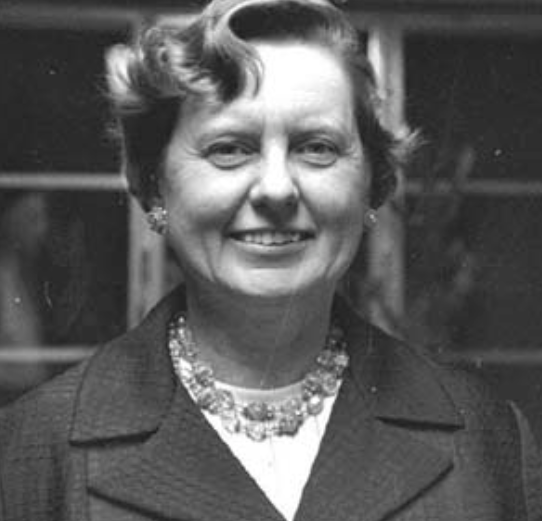
Dr. Margaret Oakley Dayhoff (1925-1983) was a pioneer in the application of mathematics and computational methods to biochemistry. She has been called the “mother and father of bioinformatics,” the interdisciplinary field using computer science, math, and statistics to manage, analyze, and interpret massive biological data, like DNA, RNA, and protein sequences.
After graduating magna cum laude from New York University in 1945 with a degree in mathematics, Dayhoff entered the chemistry PhD program at Columbia University. Dayhoff saw the potential of computers to revolutionize the field of biochemistry. Her PhD thesis used punch-card computing to calculate the resonance energies of organic molecules. At this time, fewer than 10% of PhD candidates were women, and the numbers were even lower in the sciences. Dayhoff married physicist Edward Dayhoff in 1948 and the couple had two daughters, Ruth and Judith. Dayhoff made a substantial mark in biochemistry despite significant discrimination against women in science and especially against working mothers in the 1950s. After completing postdoctoral fellowships at the Rockefeller Institute and University of Maryland, Dayhoff took a few years off from her career to raise her two daughters. When she tried to rejoin the research community, she faced pushback from scientists who thought she had become “out of touch” during her time away from science, and struggled to find professional opportunities.
In 1960 Dayhoff accepted a job with the new National Association for Biomedical Research, where she would go on to do her most consequential research. Techniques and terminology she developed in the 1960s and 1970s are still in widespread use by biochemists today. In 1965 she published the Atlas of Protein Sequence and Structure, a compilation of all known protein sequences, which has been cited over 4,000 times. She developed one of the first substitution matrices for proteins, one-letter codes for amino acids that enabled computer sequencing and sorting, and an innovative database of nucleic acids to enable researchers to better understand protein structures. Her work has been foundational to the sequencing of many important proteins, including insulin.
Dayhoff was the first female officer of the Biophysical Society, serving as both its secretary and its president. Both of Dayhoff’s daughters also went on to careers in the sciences. After her death the Biophysical Society established the Margaret O. Dayhoff Award, given to a promising early-career woman in biophysics.